
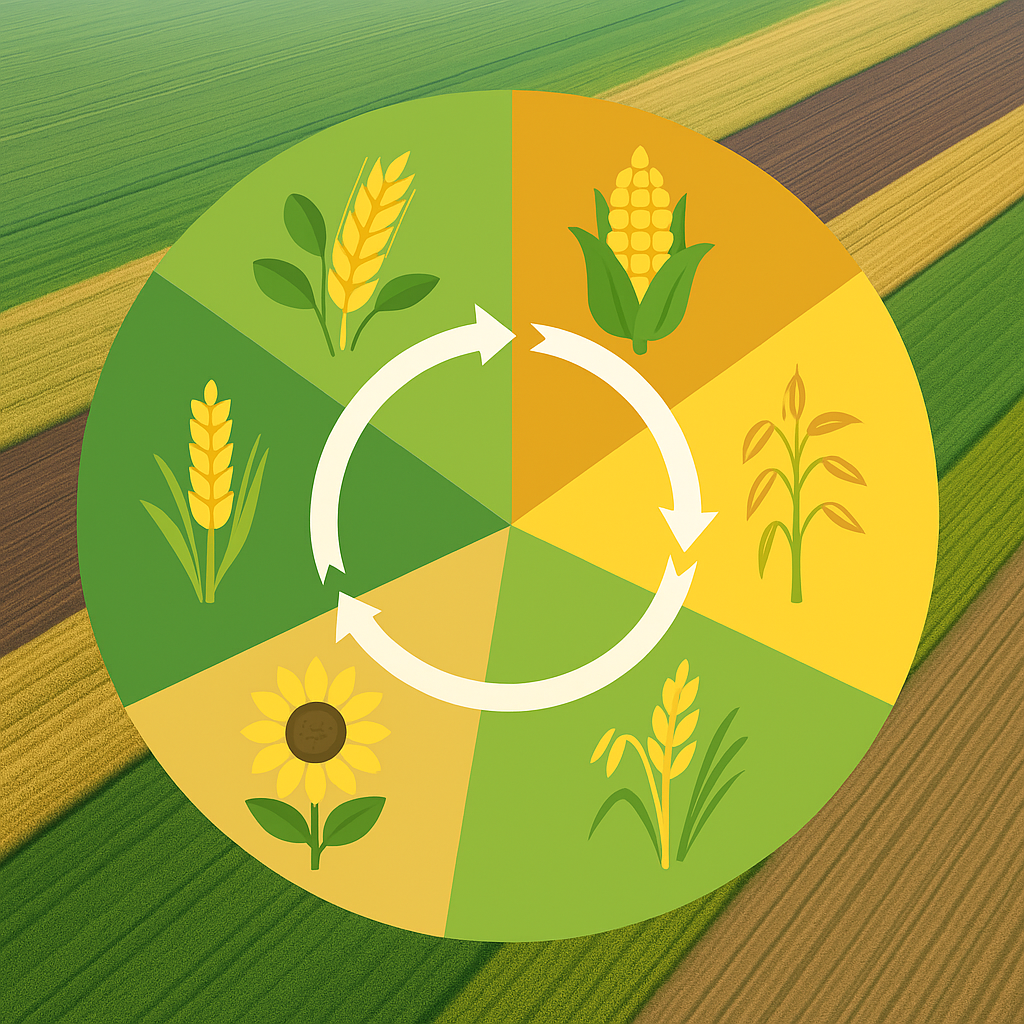
Crop rotation and structure of crop rotations
Crop rotation is a method of planned rotation and organization of crops grown on certain plots (fields) or larger arable areas. Effective crop rotation is a practice that does not require additional costs, but provides the basis for applying modern technologies for each crop within the rotation system.
It plays a key role as a means of efficient land use. When designing specialized crop rotations—field, vegetable, or mixed—farmers must consider factors such as crop biological requirements, economic constraints, and soil-climate conditions. These factors determine the structure and temporal distribution of crops in the different fields.
Crop rotation
Crop rotation depends mainly on their biological compatibility and the degree of resistance to long-term cultivation in the same place. For example, wheat and barley — representatives of cereal crops — have low resistance when repeatedly sown in the same field over several years. Their yields decrease and the quality of the produce — such as gluten and protein content — also deteriorates. This is due to the accumulation of specific pathogenic microorganisms in the soil, which reduce the availability of mineral nitrogen.
Crop structure in crop rotation
The structure of the crops determines their relative share in the crop rotation. It must correspond to the agro-climatic conditions of the region — temperatures, rainfall and soil characteristics. Some crops — such as cotton, peanuts and sesame — require specific temperatures and humidity during the growing season, which makes them suitable for southern Bulgaria.
The duration of the crop rotation and the number of fields in it depend on the type and tolerance of the crops. For example, crops with a high degree of self-tolerance allow shorter crop rotations, while those with low tolerance require longer intervals between sowings. Overly complex crop rotations with many fields are not recommended as they complicate mechanized cultivation, fertilization and irrigation.
Sample guidelines for specialist crop rotations
On sloping terrain, it is advisable to include crops with a soil-protecting effect, such as perennial grasses or cereal-legume mixtures. The share of trench crops in such systems should not exceed 25%. Example rotation sequence: wheat crop - trench crop - wheat - wheat-legume mix or grasses for two years, followed by trench crops and cereals.
To take advantage of autumn-winter and spring rainfall, suitable predecessors for staple crops such as grain maize, sorghum or tobacco can be winter peas with grain mixtures, as well as early potatoes or spring pea-oat mixtures. After harvesting the winter cereals, secondary crops such as silage maize, millet, beans or late varieties of potatoes can be sown.
Frequent droughts in the summer and autumn months in recent years necessitate the use of drought-resistant crops and varieties with a short growing season. Some staple and secondary crops require irrigation to ensure good yields.
By applying the above guidelines, farmers can optimize their production practices according to the conditions in their region.
Example crop rotation (table)
300 ha, 6 fields of 50 ha each
| Year | Field 1 | Field 2 | Field 3 | Field 4 | Field 5 | Field 6 |
| 1 | Wheat | Sunflower | Corn | Alfalfa | Barley | Triticale |
| 2 | Sunflower | Wheat | Barley | Alfalfa | Corn | Oats |
| 3 | Corn | Oats | Sunflower | Alfalfa | Wheat | Barley |
| 4 | Barley | Corn | Wheat | Alfalfa | Sunflower | Oats |
| 5 | Wheat | Barley | Oats | Alfalfa | Corn | Sunflower |
No Comments Yet